Expo West 2026 Marked a Quiet Shift in Supplements
If Expo West used to be about chasing the next breakout ingredient, this year felt like something else entirely. Walking the supplement halls in 2026, the category didn’t feel louder or more extreme, it felt calmer, more grounded, and surprisingly human.
The biggest shift wasn’t what supplements claim to do. It was how clearly brands are designing for real life now. Less optimization. Less pressure. More practicality.
Here’s what that looked like on the ground.
Supplements Are Finally Built for Real Routines
One thing became obvious early on: brands are no longer assuming consumers will follow perfect wellness routines.
Gone were the hyper‑complex protocols and long daily regimens. Instead, supplements were designed to fit into messy, inconsistent days. One‑a‑day formats, simplified stacks, and products meant to replace something, not add another step, were everywhere.
The messaging reflected that shift too. Booth conversations leaned away from “biohacking” and toward support. Support for energy without burnout. Support for stress without sedation. Support for digestion, sleep, and focus without asking people to overhaul their lives.
The category felt more empathetic than aspirational.
Formats Are Doing the Heavy Lifting Now
Even in the supplement halls, it often felt like you were walking through food and beverage.
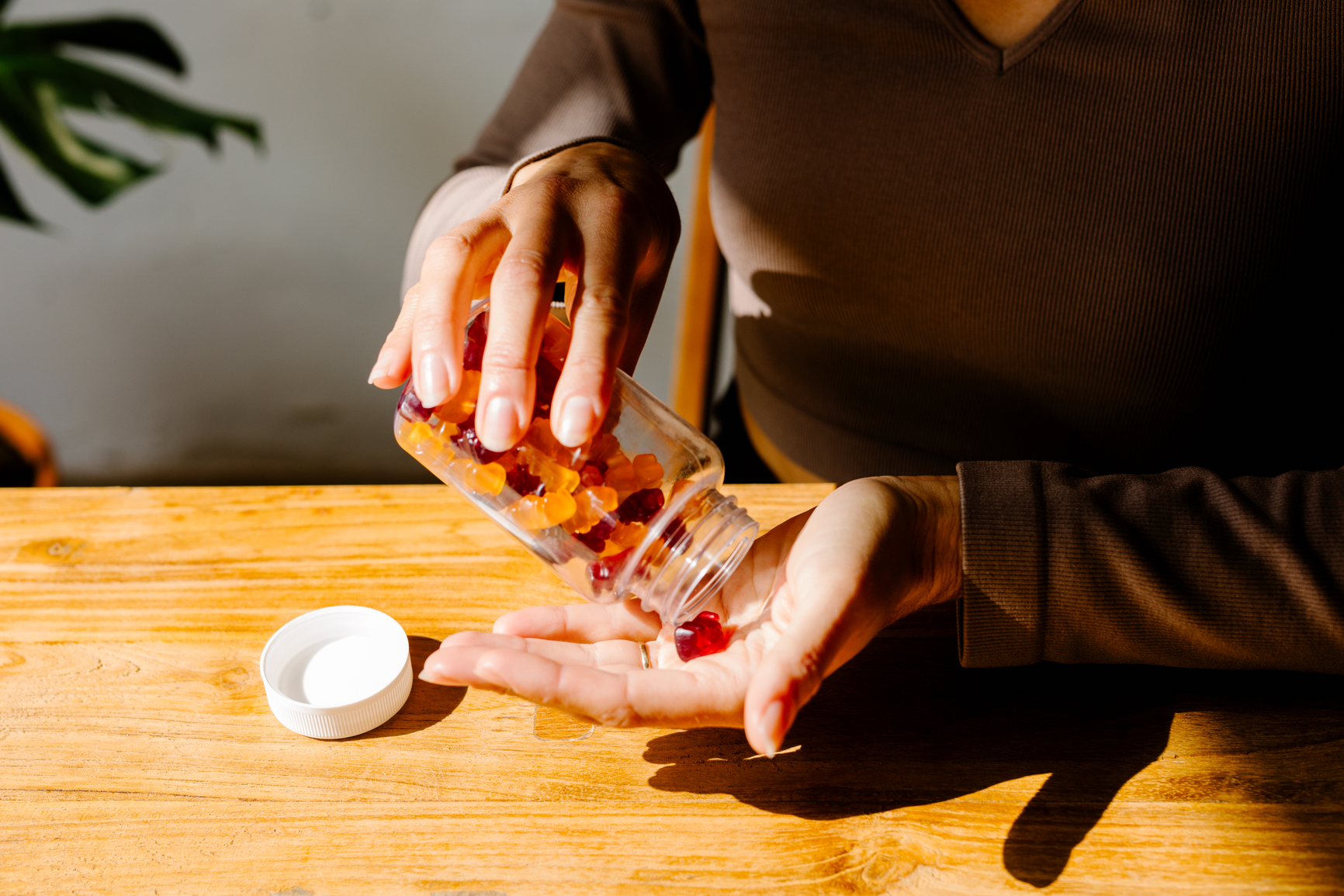
Capsules and powders are still around, but they’re no longer the default. Chews, gummies, drink mixes, and shots dominated, not because they’re trendy, but because they’re easier to stick with.
What stood out was how much these formats have matured. This wasn’t vitamin candy energy. These products felt intentional, adult, and daily‑use friendly. Drink mixes were subtle enough to use regularly. Chews didn’t feel gimmicky. Shots were tied to specific a moment such as morning focus, afternoon reset, or evening wind‑down.
Supplements are clearly borrowing from food culture, and the result feels more intuitive and less clinical.
Benefit Stacking Is Replacing Single‑Purpose Products
Single‑benefit supplements felt almost behind the curve this year.
Most brands were stacking benefits thoughtfully, such as: stress paired with sleep, focus paired with calm, gut health paired with immunity or metabolism. The difference from past years is that these stacks felt considered, not chaotic.
Instead of “everything and the kitchen sink” formulas, brands focused on how benefits actually connect in the body and daily lives. When to take it mattered. Why it existed mattered.
It was clear that consumers don’t want ten bottles anymore. They want fewer products that do more, and in turn do it transparently.
Brain Health Took a More Grounded Turn
Cognitive health had a noticeable presence at Expo West 2026, but the tone was different than in previous years.
Rather than promising peak performance or superhuman productivity, brain supplements were positioned around mental clarity, emotional steadiness, and everyday focus. Less about pushing harder. More about feeling less scattered.
Ingredients like magnesium, L‑theanine, creatine, ketones, and postbiotics showed up repeatedly, often in combination. Caffeine wasn’t gone, but it no longer felt like the hero. Brands seemed aware that consumers are burned out, and therefore designing accordingly.
Mental wellness supplements felt less like tools for grinding and more like tools for sustainability.
Creatine Stepped Out of the Gym and Into Everything Else
Creatine’s presence this year was impossible to miss, and it wasn’t confined to sports nutrition.
It showed up in cognitive formulas, energy blends, women’s wellness products, and even beverage‑adjacent supplements. The old perception of creatine as “just for lifters” felt officially outdated.
At Expo West 2026, creatine was treated as a multi‑benefit ingredient tied to brain health, cellular energy, and longevity. No bravado. No muscle‑centric branding. Just function.
It felt like creatine had finally found its second life, and this one is far more mainstream.
Longevity Was Everywhere, Even When It Wasn’t Labeled
Longevity wasn’t always spelled out on packaging, but it quietly shaped a lot of what we saw.
Rather than dramatic anti‑aging promises, brands talked about cellular health, inflammation management, mitochondrial support, and aging well over time. The energy around longevity felt steadier and more science‑aware than in years past.
There was less hype, more restraint, and a noticeable emphasis on products designed for long‑term use rather than quick fixes.
Longevity didn’t feel like a trend, it felt like a mindset settling in.
Women’s Health Continued to Get More Specific
Women’s wellness wasn’t new at Expo West, but it felt more nuanced than ever.
Instead of vague “hormone balance” messaging, brands addressed specific life stages and needs: perimenopause, menopause, cycle support, stress and sleep tied to hormonal shifts.
What stood out most was how informed the conversations felt. Education had improved. The category felt more credible, less performative, and far more respectful of real experiences.
Women’s health supplements are clearly moving beyond surface‑level branding into substance.
Gut Health Grew Up
Gut health didn’t disappear, it matured.
Rather than broad probiotic claims, brands leaned into postbiotics, fibre integration, and digestive support framed as part of metabolic and overall health. The messaging felt calmer and more realistic, with less miracle language and more long‑term thinking.
Gut health no longer felt like a trend trying to prove itself. It felt foundational.
Fibre and Protein Stepped Into a More Supportive Role
Fibre and protein also showed up differently at Expo West 2026. Not as performance macros or aggressive fixes, but as quiet essentials built into everyday routines.
Fibre appeared beyond traditional digestive SKUs, folded into gummies, drink mixes, and metabolic‑adjacent formulas. The messaging moved away from cleansing and urgency, and toward regularity, blood sugar support, and long‑term gut health. Fibre was positioned as something to take consistently, not reactively.
Protein followed a similar shift. Rather than muscle‑first positioning, it was framed around satiety, metabolic health, and aging well. Formats felt lighter and more flexible: clear proteins, beverage‑friendly powders, and easy add‑ins designed to support meals instead of replacing them.
Like much of the supplement floor this year, fibre and protein weren’t flashy. They were practical. And in a show defined by restraint and realism, that felt intentional.
Trust Became the Real Differentiator
Across the supplement floor, one undercurrent kept coming up: trust.
Brands emphasized shorter ingredient lists, clearer sourcing, third‑party testing, and straightforward claims. There was noticeably less pseudo‑science and fewer overengineered formulas.
The booths that felt most confident were often the simplest. They didn’t try to overwhelm. They explained clearly what the product did, why it existed, and who it was for.
In a crowded category, clarity stood out.
The Bigger Shift: Supplements Are Becoming More Human
Leaving Expo West 2026, it didn’t feel like the supplement industry was chasing the next miracle ingredient.
It felt like it was settling into adulthood. Less obsession with extremes. More respect for daily life. More integration with food, routine, and real behaviour.
Supplements aren’t trying to turn people into optimized machines anymore. They’re trying to help people feel steadier, clearer, and more supported, without asking them to do more.