Methanol Uses in Alberta: Energy, Wastewater and Manufacturing
What is Methanol Used for In Alberta?
Methanol is used across Alberta for hydrate inhibition, freeze protection, gas processing, wastewater denitrification, and industrial manufacturing. Its ability to act as a process chemical, solvent, feedstock and fuel component makes it one of industry’s most versatile chemical building blocks.
Methanol, also called methyl alcohol, has the chemical formula CH₃OH. It is a clear, colourless liquid that is perfectly miscible with water. Because application requirements vary, users should confirm product specifications, dosage, storage and handling requirements with qualified technical and safety professionals.
Methanol for Hydrate Inhibition in Oil and Gas
Natural gas streams can contain water. Under specific temperature and pressure conditions, water and gas molecules can form hydrates that restrict pipelines, valves, instruments, and processing equipment. Hydrates can also be very dangerous and costly if they damage the pipelines themselves.
Methanol is widely used as a thermodynamic hydrate inhibitor. It lowers the temperature at which hydrates form, helping operators support flow assurance and reduce the risk of blockages. In Northern Alberta, hydrate management is especially important for pipeline safety and operational continuity during cold weather operations.
How Does Methanol Help with Freeze Protection?
Methanol depresses the freezing point of water and may be used in winterization programs for wellheads, gathering systems, transmission pipelines, and gas processing infrastructure. Its use should be based on site-specific engineering, safety, and operating requirements.
Methanol in Gas Processing Facilities
Gas processing facilities may use methanol within flow assurance, hydrate prevention and cold-temperature operating programs. Reliable quality, consistent specifications, and dependable supply are important because interruptions can affect equipment reliability and plant up time.
Methanol in Wastewater Treatment
Municipal and industrial wastewater treatment systems may require an external carbon source for denitrification. Methanol can provide carbon that supports microorganisms as they convert nitrates to nitrogen gas. When selected and managed appropriately, methanol can support nutrient removal, process control and compliance objectives. Facilities should assess dosing, storage, handling and process requirements with qualified wastewater professionals.
Methanol as an Industrial Chemical Building Block
Methanol is a feedstock used to produce chemicals that contribute to construction materials, automotive products, coatings, adhesives, plastics, resins, and consumer goods. It may also be used directly as an industrial solvent or process chemical, depending on the application.
Emerging Methanol Energy Applications
Methanol is also being considered in lower-carbon fuel strategies, marine fuel applications, renewable methanol pathways, and energy-transition technologies. Environmental performance depends on how the methanol is produced, transported and used, so sustainability claims should be supported with current, application-specific evidence.
Why Methanol Quality and Supply Reliability Matter
The right product is only one part of a dependable methanol program. Customers should also consider specification of consistency, inventory access, logistics, technical support and the supplier’s relationship with the producer.
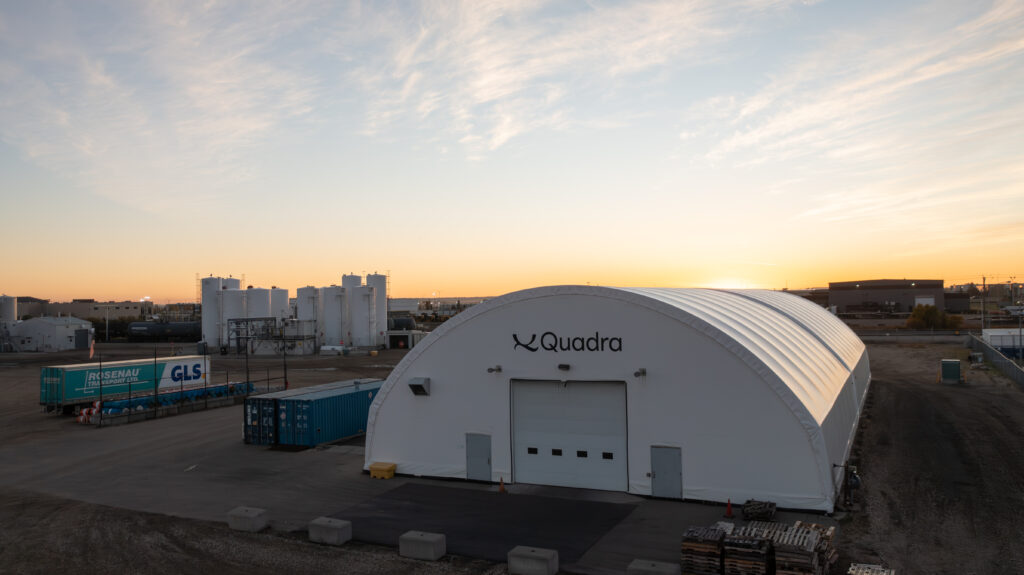
Quadra is a distribution partner for Methanex, and supports Alberta customers with local expertise and established distribution capabilities. The partnership has more than 30 years of experience serving Canadian methanol customers.
Frequently Asked Questions: Methanol Applications
What is methanol used for in oil and gas?
Common uses include thermodynamic hydrate inhibition, freeze protection, flow assurance and support for cold-weather gas processing operations.
Why is methanol used for hydrate inhibition?
Methanol lowers the temperature at which gas hydrates form, helping reduce the risk of restrictions or blockages in pipelines and equipment.
How is methanol used in wastewater treatment?
Methanol can serve as an external carbon source for microorganisms during denitrification, supporting the conversion of nitrate into nitrogen gas.
Is methanol used in manufacturing?
Yes. Methanol is used as a chemical feedstock, industrial solvent and process chemical in value chains that produce resins, plastics, coatings, adhesives and other products.
How should an operation choose a methanol supplier?
Evaluate product specifications, inventory access, delivery capabilities, technical support, local experience and the supplier’s producer relationship.